
December 22, 2003 — The Day Santali Found Its Place in History
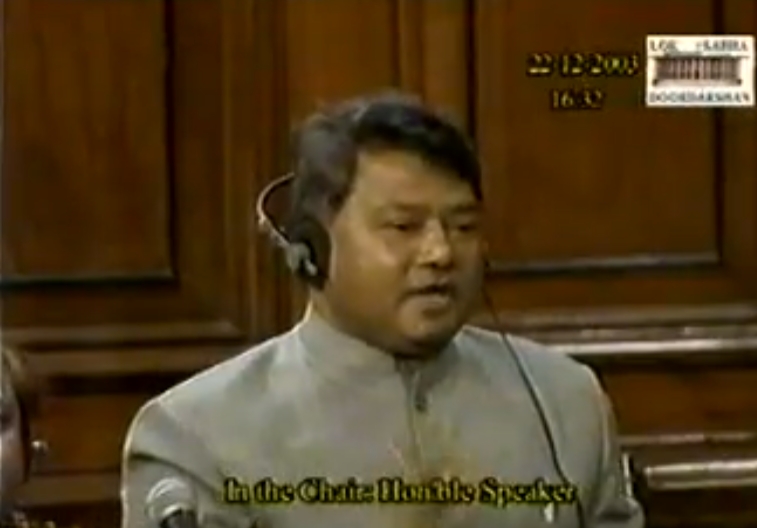
Today—December 22—might just look like another winter day on the calendar, but for the Santal tribe, it marks something profound: Santali Language Victory Day. It’s the anniversary of the day, back in 2003, when Santali—the mother tongue of millions of Santal people across India, Bangladesh, Nepal, and Bhutan—was finally recognized in the Eighth Schedule of the Indian Constitution.
Hey there,
Now, you might wonder: Why does a line in a legal document matter so much?
Let me tell you—it’s not just about official status. It’s about identity, access, and possibility.
For generations, Santali-speaking children grew up learning in languages that weren’t theirs—often Hindi, Bengali, or English—while their own rich, lyrical mother tongue was pushed to the margins. This isn’t just inconvenient; it’s deeply disempowering. Research—and lived experience—shows that when kids learn in their mother tongue, especially in early education, they understand better, express themselves more clearly, and stay in school longer.
Before 2003, Santali wasn’t just “overlooked”—it was systematically excluded from classrooms, government offices, and public life. That meant Santal children started their education at a disadvantage, not because they lacked intelligence or curiosity, but because the system refused to meet them where they were.
But when Santali gained constitutional recognition on December 22, 2003, it wasn’t just symbolic. It opened doors.
Suddenly, there was a legal basis to demand textbooks in Santali, teachers trained in Ol Chiki script, and exams conducted in their own language. It meant Santali could be used in official communication, in courts, in local governance. It meant elders could pass down oral histories without fearing their language would die with them.
And here’s the bigger picture: language is development.
When a community can learn, think, debate, innovate, and dream in its mother tongue, it doesn’t just preserve culture—it fuels personal confidence, social inclusion, cultural pride, and yes, economic mobility. A Santali-speaking engineer, nurse, or entrepreneur isn’t just succeeding despite their roots—they’re succeeding with them, armed with the full power of their linguistic and cultural identity.
Think about it: if you were only allowed to study quantum physics or write a business plan in a language you barely understood, how far would you get? That’s the barrier millions of Indigenous children face daily—unless their language is honored as a legitimate vehicle of knowledge.
Recognition didn’t solve everything overnight. Implementation is still uneven, and many Santal villages still lack Santali-medium schools. But December 22 gave them a right they could claim, a foundation to build on, and proof that their voice matters in the national story.
So today, as we remember this quiet but powerful victory, let’s not just celebrate the past—let’s commit to a future where every Santal child can read, write, learn, and lead in the language their grandmother sang them lullabies in.
Because when a language thrives, its people do too.
— With respect and hope
P.S. If you’ve never heard Santali spoken or seen the flowing curves of Ol Chiki script, take a moment to explore it. Behind every letter is a world of wisdom waiting to be shared—not translated, but understood.
You see, on that day, the Santali language was officially included in the Eighth Schedule of the Indian Constitution. That might sound like bureaucratic jargon, but trust me—it meant the world.
For generations, the Santali people—part of one of India’s largest Indigenous (Adivasi) communities—had spoken their language, told their stories, sung their songs, and preserved their identity through Santali, often without formal recognition. Written in the beautiful Ol Chiki script (created by Pandit Raghunath Murmu in the 1920s), Santali wasn’t just a way of speaking—it was a vessel of culture, history, and resistance.
But for a long time, Santali was sidelined—left out of official documents, ignored in education, and rarely heard in government spaces. That changed on December 22, 2003, when the Indian Parliament passed the 92nd Constitutional Amendment Act, adding Bodo, Dogri, Maithili, and—yes—Santali to the list of scheduled languages. Suddenly, Santali wasn’t “just a tribal dialect.” It was a constitutional language of India, with all the rights and respect that come with it.
I remember hearing elders talk about this day. Not with loud celebration, but with quiet pride—like a deep breath after holding it for decades. Parents could finally imagine their kids learning Santali in school. Writers could dream of publishing without translation barriers. And the Ol Chiki script? It started appearing on government letterheads, street signs, and even currency notes.
This wasn’t just about words on paper. It was about dignity. About saying: Your language matters. Your voice belongs.
So today, even though it’s not a public holiday or a trending topic, I honor December 22, 2003—the day Santali stepped into the light not as an afterthought, but as a living, breathing language with a rightful place in the heart of a nation.
If you’ve never heard Santali spoken or seen Ol Chiki written, I highly recommend looking it up. There’s poetry in those curves and consonants—a whole world waiting to be heard.
Until next time,
— a friend who believes every language carries a universe.
P.S. Santali speakers—thank you for keeping your language alive. Your victory is everyone’s victory.